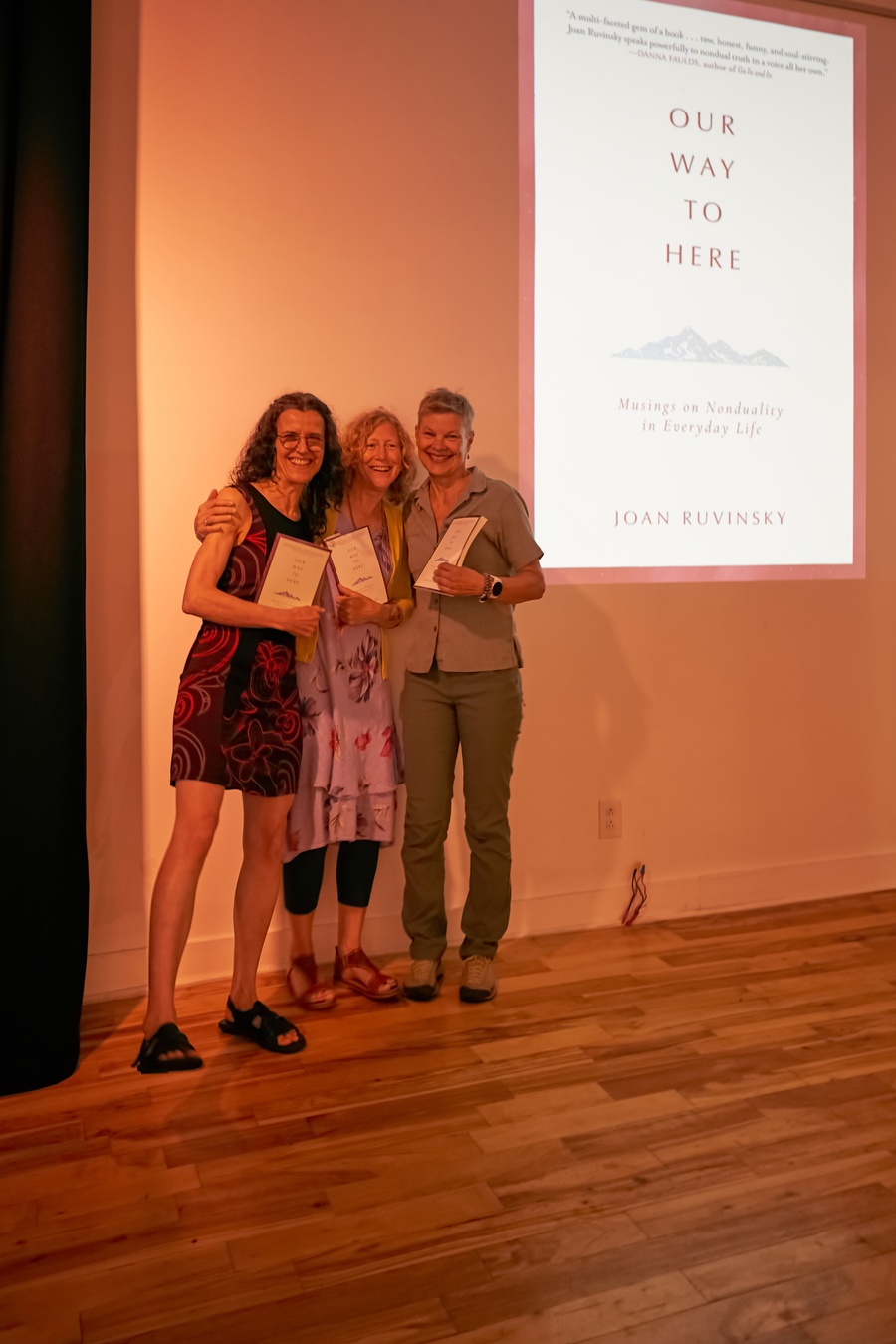
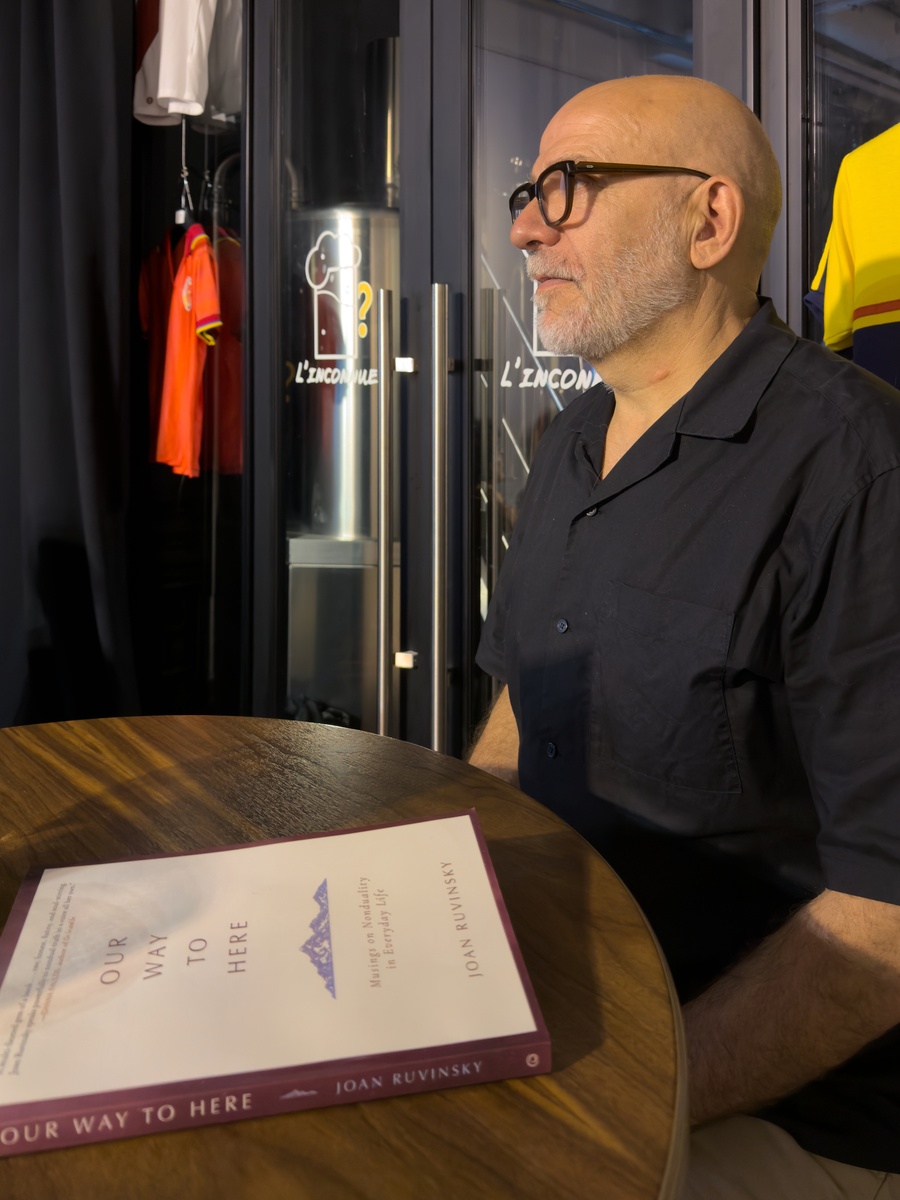
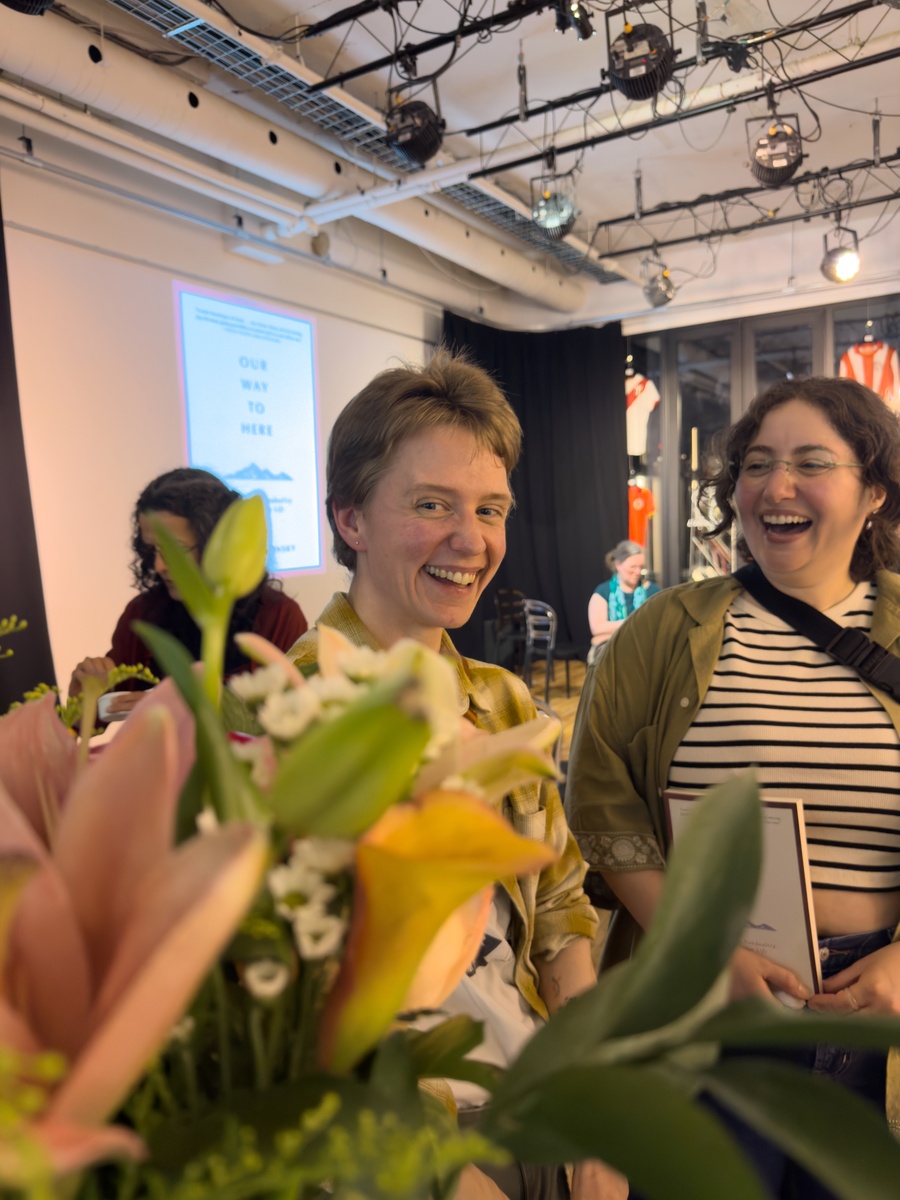
our way to here
par Joan Ruvinsky
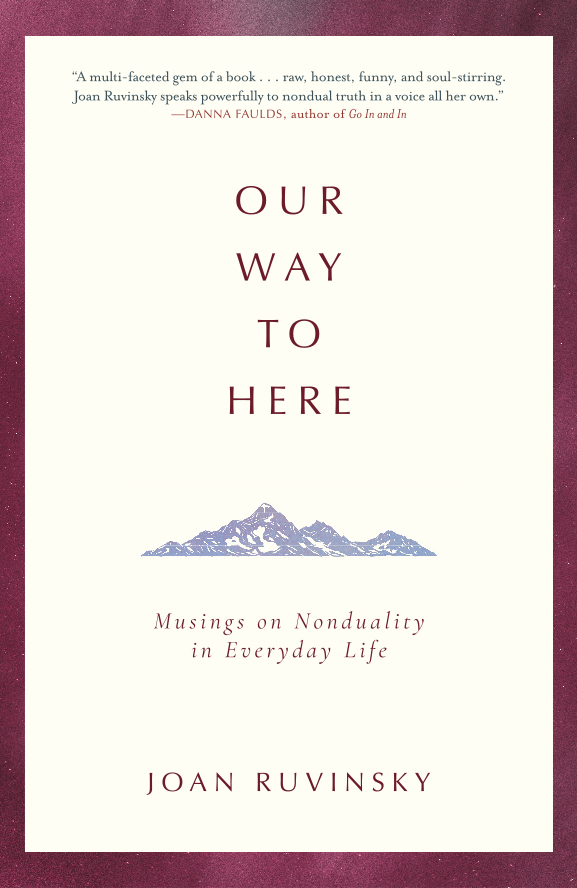
Our Way to Here is a luminous collection of essays, poems, and reflections by spiritual teacher Joan Ruvinsky. Rooted in nondual understanding and
resonant with the Advaita tradition of Jean Klein, these writings bring spirituality fully into the textures of everyday life, embracing love and
loss, birth and death, the ordinary and the ineffable.
Spanning decades of writing, this collection traces a life devoted to truth. With a voice that is precise, playful, and uncompromisingly honest,
Ruvinsky keeps pointing to what has always been present: awareness itself, both intimate and impersonal. Our Way to Here accompanies the reader in this lived recognition.
During the initial launch period, copies are available at a reduced price, with discounted pricing for multiple copies.
Praise for Our Way to Here
A collection of various poems and essays about the concept of nonduality.
Ruvinsky begins by introducing the person mentioned in the dedication of the book, a man named Jean Klein, well known in spiritualist circles for his beliefs in nonduality. For those not in the know, this is the idea that all of nature, time, people, and reality are one, not separate entities. Klein held many retreats, wrote books, and taught students within this discipline from 1960 into the 1990s. The author explains that her relationship with Klein inspired her own beliefs and practices, and his ideas are also the foundation for the book. After the introductory sections, the text dives straight into hard philosophy. Many of these poems are expressed as stream-of-consciousness musings, while others are recognizable as structured poems. Other writings most closely resemble an essay format. One of the most poignant poems, titled “Back to the Source,” describes how beautiful landscapes wouldn’t be quite as impressive without all their inherent components: “Mostly, it’s about thanking the mountains for holding the sky with such grace. / Were it not for the foreground, the sky would go unnoticed. / Were it not for the horizon, the background could be overlooked.” Although each discrete work is constructed with individual nuance and differentiating qualities, the authorial voice is distinct and consistent, and Ruvinsky’s passion and knowledge are obvious. The spiritualist genre this work ostensibly falls within is often viewed in one of two extreme ways: as a lifeline to believers or as a ridiculous falsehood to nonbelievers. This work toes the line well, including personal experience, explanations for a layperson, and deeper exploration into the tenets of nondualist thinking. Some of these concepts include a joining of oneself with the greater world and reality, an awareness of oneself as a piece of a larger whole, and the idea that opposites such as life and death are really just mirrors of each other. The different mediums of storytelling and teaching keep the narrative fresh, while the author’s confidence and command of language add an extra layer of playfulness to the text.
A poignant love letter to finding peace with one’s place in the universe.
— Kirkus Reviews